Passing your driving test is an exciting milestone. You’ve earned the freedom to drive independently, but before you get behind the wheel on your own, it’s important to make sure you have the right car insurance in place.
Whether you’re continuing cover from a learner policy or arranging your first insurance as a full licence holder, understanding your options can help you make the right choice.
About this guide:
At A Choice, we specialise in learner, young and newly qualified driver insurance, helping drivers find suitable cover at every stage of their driving journey.
This guide explains what happens to your insurance after passing, the different types of cover available and what to consider when choosing your first policy.
A Choice is a trading style of Premium Choice Limited, which is authorised and regulated by the Financial Conduct Authority (firm reference number 312245).
Last updated: November 2026
What happens to your car insurance when you pass your driving test?
nce you’ve passed your practical driving test, your insurance requirements change because you’re now qualified to drive without supervision.
However, passing your test doesn’t automatically mean your existing learner insurance will cover you to drive independently.
Some learner insurance policies end as soon as you pass, meaning you’ll need to arrange a new policy before driving on your own.
Other policies may allow you to continue your existing cover, subject to the insurer’s terms.
Can you keep your learner insurance after passing?
With eligible A Choice annual learner driver policies, you may be able to continue your existing insurance after passing your test without having to cancel and arrange a completely new policy.
You’ll need to notify A Choice immediately after passing so your insurer can assess the change from a provisional to a full driving licence.
Continuing cover is subject to underwriting acceptance, policy terms and any additional premium.
This can make the transition from learner to newly qualified driver more straightforward, particularly if you’re continuing to drive the same car.
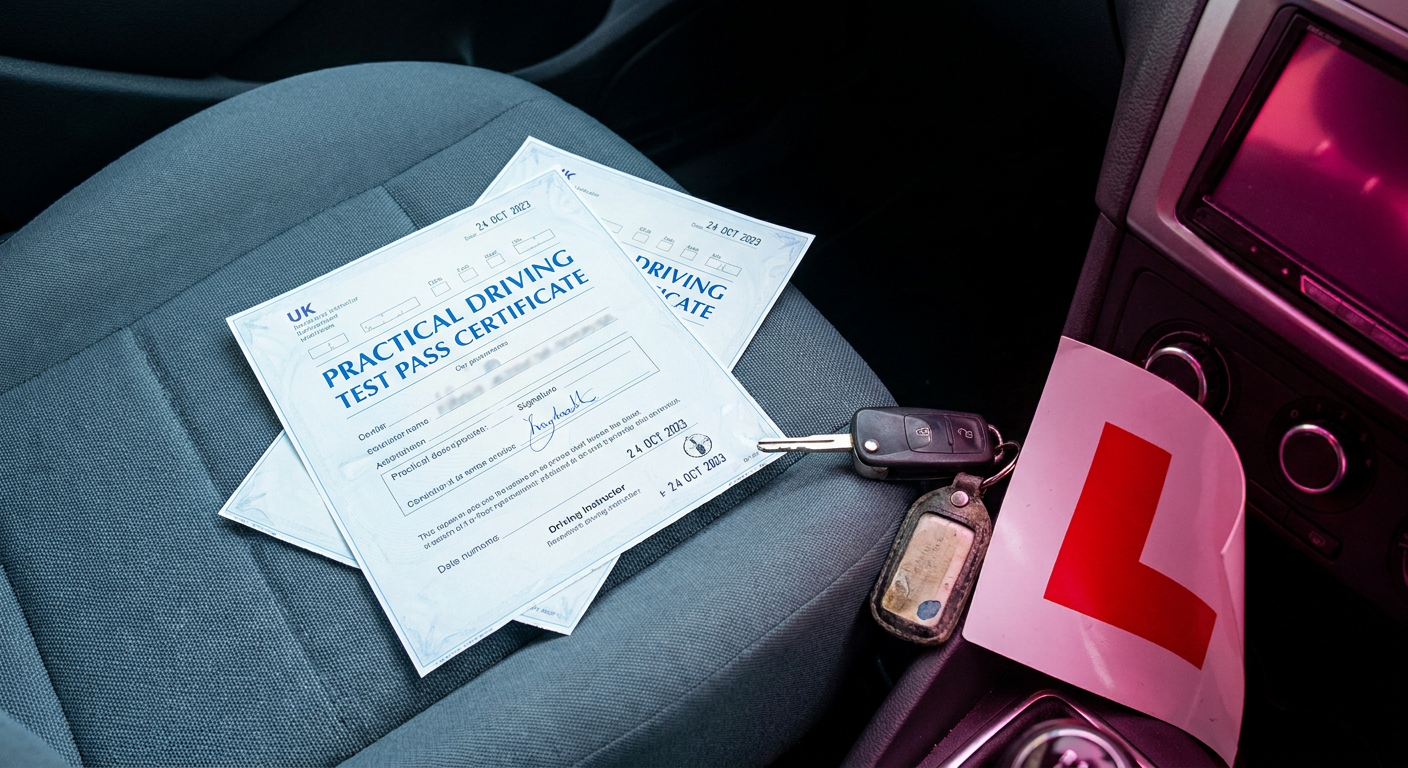
Can you drive home after passing your test?
Before driving independently, you must make sure your insurance covers you as a full licence holder.
If your learner policy has ended or hasn’t been updated, you won’t be insured to drive home on your own.
If someone else drives the vehicle home, they must have suitable insurance to drive that car.
For more information, read our guide on what happens when you pass your driving test.
What insurance options are available for newly qualified drivers?
Once you’ve passed your test, there are several options to consider when arranging car insurance.
Your own car insurance policy
If you own a car or are its main driver, taking out a policy in your own name may be suitable.
Having your own annual policy can also allow you to build a No Claims Bonus, subject to the insurer’s rules.
A Choice offers young driver insurance options for newly qualified drivers, including telematics and non-telematics cover, subject to eligibility.
Being added as a named driver
If you occasionally drive a parent’s or family member’s car, you may be able to be added to their existing insurance as a named driver.
However, the insurer must agree to this arrangement, and you must accurately declare who drives the vehicle most frequently.
Naming a parent as the main driver when you’re actually the person who uses the car most is known as fronting.
Fronting is a form of insurance fraud and can result in claims being refused, policies being cancelled or treated as invalid, and potentially prosecution.
Black box or standard car insurance
Newly qualified drivers may have a choice between telematics insurance and standard non-telematics policies.
A black box policy uses a device in the vehicle or a mobile app to monitor aspects of your driving, such as speed, braking and mileage.
Some telematics policies include driving conditions or restrictions, while others don’t.
A standard non-telematics policy doesn’t normally monitor your driving behaviour in this way.
Neither option is automatically the best choice for everyone. Compare the price, cover and conditions to find a policy that suits your circumstances.
Read our telematics frequently asked questions for more information.
What level of car insurance do newly qualified drivers need?
There are three main levels of car insurance available in the UK.
- Third Party Only: The minimum legal level of cover. It covers your liability for injury or damage caused to other people and their property, but not damage to your own vehicle.
- Third Party, Fire and Theft: Includes third-party cover, along with protection if your own car is stolen or damaged by fire, subject to policy terms.
- Comprehensive: Provides broader protection, generally including accidental damage to your own car, subject to the policy’s terms, exclusions and excesses.
Comprehensive insurance isn’t always the most expensive option, so it’s worth comparing the different levels of cover available.
You can explore the options on our car insurance page.
What affects the cost of insurance for newly qualified drivers?
Car insurance can be more expensive when you’ve recently passed your test because insurers generally consider inexperienced drivers to present a higher risk.
However, your premium depends on several factors, including:
- Your age and experience: How long you’ve held your full driving licence and your driving history.
- The car you drive: Its make, model, value, performance and insurance risk rating.
- Where you live: Your postcode and where the vehicle is kept overnight.
- Your annual mileage: How far you expect to drive each year.
- How you use the car: For example, social driving, commuting or business use.
- Additional drivers: Who else will be insured to drive the vehicle.
- The policy excess: How much you’re responsible for paying towards a claim, where applicable.
The excess can include a compulsory amount set by the insurer and an additional voluntary excess you choose.
Some policies also have additional excesses for young or inexperienced drivers.
It’s important to consider the total amount you could have to pay following a claim rather than choosing a policy based on price alone.
For more information, read our guide on how mileage affects car insurance.
Can newly qualified drivers build a No Claims Bonus?
A No Claims Bonus, also called a No Claims Discount, is a discount insurers may offer for completing policy years without making a claim.
Building a No Claims Bonus can help reduce future insurance premiums, although the discount and how it’s recognised vary between insurers.
Can you start building a No Claims Bonus before passing?
Yes. Some annual learner driver insurance policies allow you to start building a No Claims Bonus while you’re still learning.
With eligible A Choice annual learner policies, you can start working towards your No Claims Bonus before becoming a full licence holder.
If your insurer agrees to continue your policy after passing, this may allow you to continue progressing towards a claim-free policy year without starting a completely new policy.
This can be a useful benefit when arranging insurance for your first car.
However, a No Claims Bonus doesn’t guarantee that your overall insurance premium will decrease each year, as other pricing factors can change.
What are the rules for newly qualified drivers in your first two years?
After passing your driving test, you’ll be subject to the rules for newly qualified drivers.
Under the New Drivers Act, your licence will be revoked if you receive penalty points for an offence within two years of passing your first driving test that bring your total to six or more.
Any valid penalty points from your provisional licence also count towards this total.
If your licence is revoked, you’ll need to apply for a new provisional licence and pass both your theory and practical driving tests again before regaining your full licence.
Do penalty points affect car insurance?
Yes, they can.
Insurers may take penalty points and driving convictions into account when assessing your application and calculating your premium.
Always answer questions about your driving history accurately when arranging or renewing insurance.
Can newly qualified drivers drive abroad?
If you’re planning to drive abroad after passing your test, check what your insurance covers before travelling.
UK car insurance provides the minimum required third-party cover in EU countries and certain other European countries, but this doesn’t necessarily mean you’ll have the same level of protection as you do in the UK.
Check with your insurer about:
- The level of cover available abroad.
- How long you’re permitted to drive outside the UK.
- Whether additional cover is required.
- Any restrictions relating to your age or driving experience.
- Whether you need additional documents for your journey.
Always confirm the requirements before travelling.
You can find further information in the GOV.UK guidance on driving abroad.
What should you check before buying your first car insurance policy?
When comparing insurance for newly qualified drivers, it’s important to look beyond the headline premium.
Before purchasing your policy, check:
- The level of cover: Does it meet your needs?
- The total excess: Could you afford the amount payable if you needed to claim?
- Telematics conditions: Are there any restrictions or driving requirements?
- Policy exclusions: Are there circumstances where you wouldn’t be insured?
- Payment options: What is the total cost of paying monthly compared with annually?
- No Claims Bonus: Can you build a discount, and how will it be recognised?
- Policy changes: What happens if you change your car, address or circumstances?
Taking time to understand these details can help you choose suitable insurance for your first years of independent driving.
Frequently asked questions about insurance for newly qualified drivers
Do I need new car insurance after passing my driving test?
Not always.
Some learner policies automatically end when you pass, while others may allow you to continue your existing cover.
With eligible A Choice annual learner policies, you may be able to continue your insurance after passing, subject to underwriting and any additional premium.
Always confirm your cover has been updated before driving independently.
Is car insurance more expensive after passing your test?
It can be.
Once you’ve passed, you’ll be able to drive without supervision, which may change how your insurer assesses risk.
The price will depend on your personal circumstances, vehicle and insurer.
Do newly qualified drivers need a black box?
No. Black box insurance isn’t compulsory for newly qualified drivers.
Both telematics and non-telematics policies are available, although eligibility and pricing depend on your circumstances.
Can I drive my parents’ car after passing my test?
Yes, provided you have suitable insurance to drive it.
You may be added as a named driver on your parents’ policy if their insurer agrees, or you may have another suitable insurance arrangement.
Never assume that passing your test automatically gives you cover to drive someone else’s car.
Can I build a No Claims Bonus as a newly qualified driver?
Yes. Many annual insurance policies allow you to build a No Claims Bonus for claim-free policy years, subject to the insurer’s terms.
Some annual learner policies also allow you to start building a No Claims Bonus before passing your test.
Get newly qualified driver insurance with A Choice
Passing your driving test is the beginning of a new chapter, and having suitable insurance in place means you can enjoy your independence with confidence.
A Choice specialises in learner, young and newly qualified driver insurance, offering options for drivers at different stages of their journey.
Whether you’re continuing an eligible annual learner policy or arranging your first insurance as a full licence holder, we can help you explore cover that suits your needs.
Ready to get insured?
Visit our young driver insurance page or get a car insurance quote with A Choice.