If you’re learning to drive and want to practise in a family car or your own car between lessons, you’ll need insurance that covers you as a learner. This guide explains what a learner driver car insurance quote is, the details you’ll be asked for, what affects the price, and what happens to your cover when you pass your test.
About this guide: This guide from A Choice explains what you’ll need when getting a learner driver insurance quote, what affects the price and what happens to your cover when you pass your test. A Choice specialises in insurance for learner, young and new drivers.
A Choice is a trading style of Premium Choice Limited, which is authorised and regulated by the Financial Conduct Authority (firm reference number 312245).
Last updated: November 2026
What is a learner driver car insurance quote?
A learner driver car insurance quote tells you how much it could cost to insure a provisional licence holder to drive a particular vehicle.
The price depends on your individual circumstances, the vehicle and the type of cover you choose.
A quote isn’t insurance cover itself. Your insurance only becomes active once you’ve purchased the policy and the agreed start date and time have been reached.
There are two main ways to arrange learner driver insurance:
- A separate learner driver insurance policy: You can arrange your own cover to practise in your own car or someone else’s vehicle. Depending on the policy, this could be annual or short-term insurance.
- Being added as a named driver: You may be able to join a parent or family member’s existing car insurance policy, provided their insurer allows provisional licence holders.
Having a separate learner policy may help protect the car owner’s No Claims Bonus if you need to make a claim, depending on the policy terms. However, claims and incidents may still need to be declared when arranging future insurance.
A Choice offers learner driver insurance options designed to help learners get insured and gain valuable driving experience.
What you’ll need to get a quote
Having these details ready makes the quote quicker and more accurate:
- Your provisional licence details.
- The car’s registration number, so the insurer can identify the exact make and model.
- Where the car is kept overnight, such as a driveway, garage or on the road.
- Who owns the car and who is the registered keeper.
- Your supervising driver’s details, including their age and how long they’ve held a full licence.
- Roughly how many miles you expect to drive. Our guide on how mileage affects car insurance explains why this matters.
- When you want cover to start, and how long you need it for.
Answer every question accurately. If information is wrong or missing, a claim could be refused or the policy cancelled.
What affects the price of learner driver insurance?
Every quote is based on your own circumstances. The main things insurers look at include:
- The car. Most cars are placed in an insurance group from 1 to 50. The group, along with the car’s value and engine size, is one of the factors in the price.
- Where you live and where the car is kept.
- How long you need cover for, for example a few weeks before your test or a full year.
- The excess. This is the amount you pay towards a claim. There is usually a compulsory excess set by the insurer, and you may be able to add a voluntary excess on top. Only choose an amount you could afford to pay if you needed to claim.
- Your supervising driver, as some insurers have their own rules about who can supervise.
The rules for supervised practice
When you practise in a car with a provisional licence, GOV.UK sets out the rules your supervising driver must meet. In summary, they must:
- be at least 21 years old
- be qualified to drive that type of vehicle, for example by holding a manual car licence if the car is manual
- have held a full driving licence for at least 3 years (a licence from the UK, or from a country GOV.UK says is accepted for this)
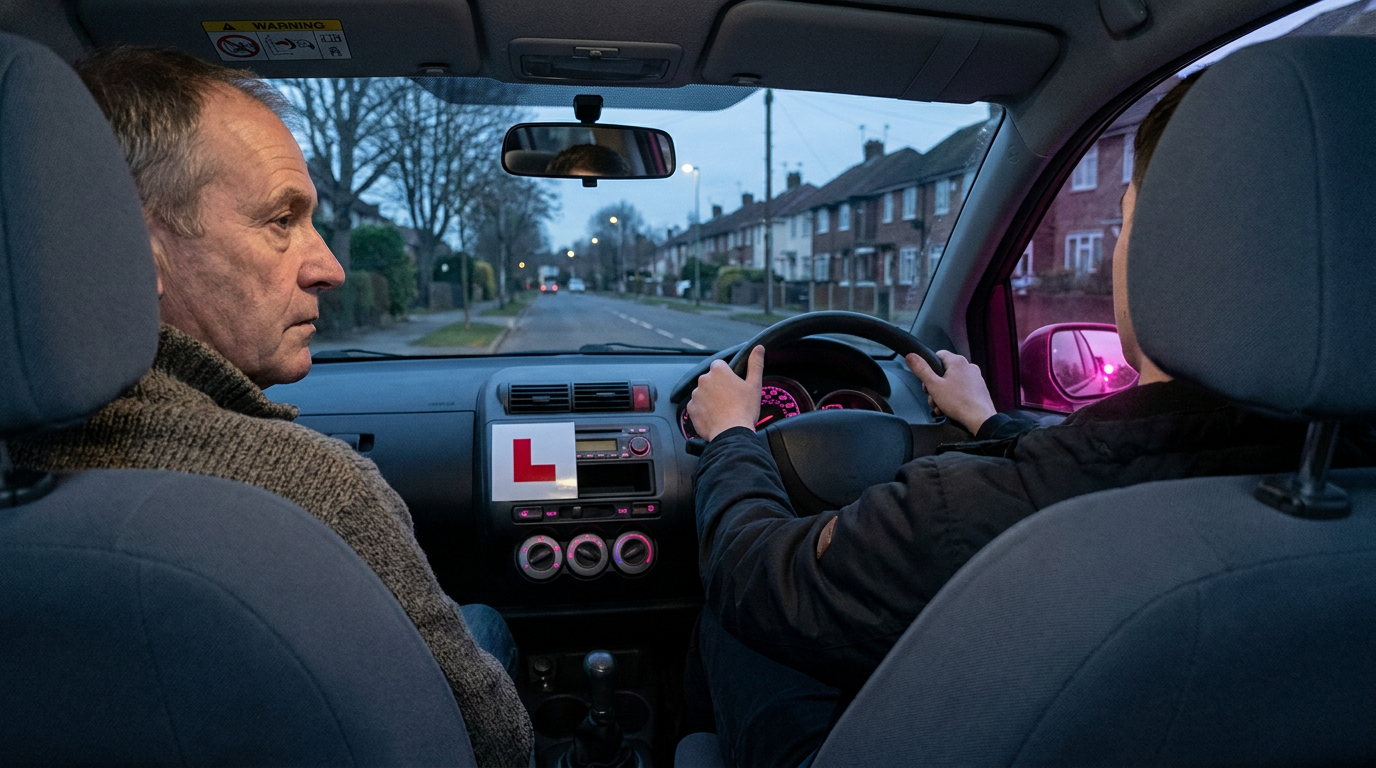
You must display L plates (or D plates in Wales) on the front and back of the car. Learners can only drive on motorways with an approved driving instructor in a car with dual controls.
Your supervisor needs to meet your insurer’s rules as well as the law, and some insurers set a higher minimum age. Check the policy before you start practising.
Fronting: be honest about who drives the car
“Fronting” is when someone is named as the main driver of a car when another person actually drives it most, for example a parent named as main driver when their child is the one who mostly uses it. It’s a form of insurance fraud. It can lead to claims being refused, the policy being cancelled or treated as if it never existed, and possible prosecution.
The main driver you declare should always be the person who uses the car most.
Annual vs short-term learner driver insurance: which should you choose?
There are different types of learner driver insurance, and the right option depends on how often you plan to practise and how long you’ll need cover.
Annual learner driver insurance
Annual learner driver insurance can be suitable if you’re learning in your own car or expect to practise regularly over several months.
Depending on the policy, benefits may include:
- Cover for regular supervised driving practice.
- The opportunity to start building a No Claims Bonus while learning.
- Options that don’t require a black box while you hold a provisional licence.
- The possibility of continuing your policy after passing your driving test, subject to underwriting and any change in premium.
With eligible A Choice annual learner policies, passing your driving test doesn’t automatically mean you need to cancel your insurance and start again. Your cover may be updated to reflect your new full driving licence, subject to the insurer’s acceptance and terms.
Short-term learner driver insurance
Short-term learner insurance may be useful if you only need cover for a limited period, such as occasional practice in a family member’s car.
It’s important to check the duration of your cover and whether the policy ends when you pass your driving test.
If you’re unsure which option suits you, explore the learner driver insurance options available from A Choice.
What happens to learner driver insurance when you pass your test?
Passing your driving test is an exciting milestone, but it’s important to understand what happens to your insurance before driving independently.
Some learner driver insurance policies automatically end when you pass, meaning you’ll need to arrange new cover before driving on your own.
However, not all learner driver insurance works this way.
With eligible A Choice annual learner driver policies, you may be able to continue your existing insurance after passing your test without having to cancel and arrange a completely new policy.
You’ll need to inform A Choice immediately after passing so we can assess the change from a provisional to a full driving licence.
Continuing cover is subject to underwriting acceptance, policy terms and any additional premium.
This can make the transition from learner to newly qualified driver more straightforward.
Important: Never assume your learner insurance automatically covers you to drive independently after passing. Contact your insurance provider and wait for confirmation that your cover has been updated before driving.
You can find out more in our guide to what happens when you pass your driving test.
If you’re looking for cover after passing, explore our young driver insurance options.
Frequently asked questions
Can I get a learner driver insurance quote for my own car?
Yes. Learner policies can cover a learner driving their own car as well as a family member’s car. See our guide to learner driver insurance on your own car.
Can I add a learner driver to my own insurance?
Many insurers allow a provisional licence holder to be added as a named driver. Adding a learner usually changes the price of the policy, and a claim made while they’re driving would be made on your policy.
Can I drive my child’s car if they have learner insurance?
Only if you’re insured to drive it, for example by being named on their policy. Some people’s own policies include “driving other cars” cover, but not all do, and it may not allow you to drive this particular car. Where it is included, it is usually third party only, which covers injury or damage you cause to other people and their property, not damage to the car you’re driving. Check your own certificate of insurance first.
Can the police check if a learner is insured?
Yes. Insured vehicles are recorded on the Motor Insurance Database, which the police can check, including with number plate recognition cameras.
Get a learner driver insurance quote with A Choice
A Choice specialises in learner driver and young driver insurance, helping drivers find cover that suits their needs.
Whether you’re practising in your own car or a family member’s vehicle, we offer annual and short-term learner insurance options.
Depending on the policy selected, you may be able to start building your No Claims Bonus while learning, avoid the need for a black box and continue your existing annual cover after passing your driving test, subject to underwriting.
Ready to get started?
Visit our learner driver insurance page to explore your options and get a quote.
A Choice is a trading style of Premium Choice Limited, which is authorised and regulated by the Financial Conduct Authority (firm reference number 312245). Registered in England and Wales: 03845329. Registered office: Pendeford House, Pendeford Business Park, Overstrand, Wolverhampton, WV9 5AP.